
21 Results for "

Homalium paniculiflorum How et Ko

" in MedChemExpress (MCE) Product Catalog:
Products (21)

21 Results for "Homalium paniculiflorum How et Ko" in MCE Product Catalog:

1
1 Cited Publications
Cat. No.: HY-79139
CAS No.: 119-24-4
Target:  

Drug Intermediate

Research Areas:  

Metabolic Disease

Pteroic acid is a precursor to significant compounds like Folic acid (HY-16637) and Vitamin B12 (HY-B0315). Pteroic acid facilitates the examination of how different compounds influence cell growth and development .
loading...
    loading...
Cat. No.: HY-N7933
CAS No.: 646-31-1
Synonyms: ALKANE C24
Target:  

Apoptosis

Research Areas:  

Inflammation/Immunology

Tetracosane (ALKANE C24) is a natural product that can be found in Acrostichum aureum. Tetracosane hows cytotoxicity and induces Apoptosis. Tetracosane has the potential for the research of peptic ulcer .
loading...
    loading...
Cat. No.: HY-135712
CAS No.: 1936-15-8
Synonyms: Acid Orange GG
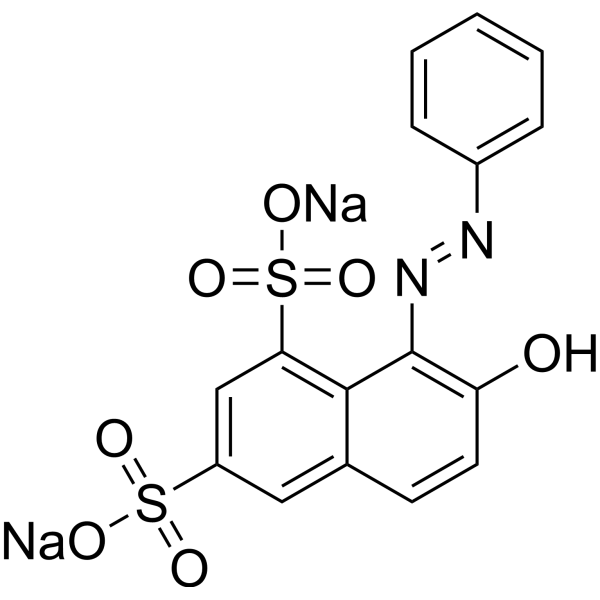
Orange G is an azo dye commonly found in textile wastewater and is mainly used for textile dyeing. Orange G has a coloring function and can give textiles a specific color. The stability and potential hazards of Orange G in the environment are often used to study the removal effects of various wastewater treatment technologies on difficult-to-degrade organic pollutants, especially the degradation of azo dyes. Related research focuses on how to destroy the azo bond of Orange G through chemical, physical or biological methods to achieve harmless treatment to solve the problem of textile wastewater pollution .
loading...
    loading...
Cat. No.: HY-P10449
CAS No.: 3098205-40-1
Target:  

Peptides

Research Areas:  

Inflammation/Immunology Cancer

M2 Peptide is a peptide targeting M2-like tumor-associated macrophages (TAMs). M2 Peptide is used to carry drugs or small interfering RNA (siRNA) to promote the repolarization of M2-like macrophages to M1-like macrophages, thereby altering the immunosuppressive state in the tumor microenvironment and enhancing the anti-tumor immune response. M2 Peptide can be used to study the effect of macrophage polarization and how this polarization change affects tumor growth and metastasis .
loading...
    loading...
Cat. No.: HY-W718146
CAS No.: 529-66-8
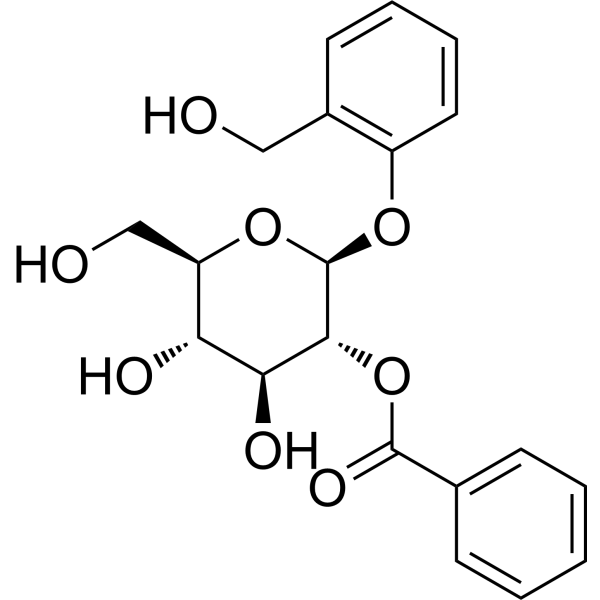
Tremuloidin (Compound 2) is a salicylic acid derivative derived from Homalium cochinchinensis. Tremuloidin has a weak activity against HIV-1 .
loading...
    loading...
Cat. No.: HY-161577
CAS No.: 701231-39-2
Target:  

Bcl-2 Family

Research Areas:  

Cancer

BFC1103 is a small-molecule compound whose primary mechanism of action involves interaction with a specific domain of Bcl-2, particularly its loop domain. This interaction induces a conformational change in Bcl-2, exposing its BH3 (Bcl-2 homology 3) domain, thereby switching Bcl-2's function from anti-apoptotic to pro-apoptotic. The cell death induced by BFC1103 is dependent on the presence of Bax or Bak, both of which are key proteins involved in the intrinsic apoptotic pathway mediated by mitochondria. BFC1103 has successfully inhibited lung metastasis of triple-negative breast cancer in mouse models. It can be utilized in studying the roles of Bcl-2 family proteins in cancer development and how they impact the survival and proliferation of cancer cells .
loading...
    loading...
Cat. No.: HY-137332
CAS No.: 87539-19-3
Target:  

Dopamine Receptor

Research Areas:  

Neurological Disease

N-Methylspiroperidol is a D2 receptor antagonist. N-Methylspiroperidol can be labeled as [18F]N-Methylspiroperidol and used in PET (Positron Emission Tomography) to study how it binds to the 5-HT2C receptor and the competition and effects of neurotransmitters like dopamine on these receptors .
loading...
    loading...
Cat. No.: HY-79139R
CAS No.: 119-24-4
Research Areas:  

Metabolic Disease

Pteroic acid (Standard) is the analytical standard of Pteroic acid (HY-79139). This product is intended for research and analytical applications. Pteroic acid is a precursor to significant compounds like Folic acid (HY-16637) and Vitamin B12 (HY-B0315). Pteroic acid facilitates the examination of how different compounds influence cell growth and development .
loading...
    loading...
Cat. No.: HY-160984
CAS No.: 92071-51-7
Synonyms: TEI 5103; TG 51
Target:  

Drug Derivative

Research Areas:  

Endocrinology

Rotraxate (TEI 5103) is an orally active anti-ulcer compound. Rotraxate can increase blood flow to the gastric mucosa and promote the integrity of the gastric mucosa. Rotraxate can be used to study the protective effects of drugs on the gastric mucosa, especially in investigating how drugs can prevent or treat gastric ulcers by acting directly on the gastric mucosa .
loading...
    loading...
Cat. No.: HY-106644
CAS No.: 59859-58-4
Synonyms: FG4963 free acid
Target:  

5-HT Receptor

Research Areas:  

Neurological Disease

Femoxetine is a serotonin (5-HT) inhibitor with antidepressant properties. Femoxetine increases serotonin levels in the brain by preventing serotonin from being reabsorbed by nerve cells, resulting in increased concentrations of the neurotransmitter in the synaptic gap, which enhances serotonin signaling. Femoxetine can be used to study the role of serotonin in depression and other emotional disorders, and how 5-HT reuptake inhibitors affect mood and behavior .
loading...
    loading...
Cat. No.: HY-106644A
CAS No.: 56222-04-9
Synonyms: FG4963
Target:  

5-HT Receptor

Research Areas:  

Neurological Disease

Femoxetine hydrochloride is a serotonin (5-HT) inhibitor with antidepressant properties. Femoxetine hydrochloride increases serotonin levels in the brain by preventing serotonin from being reabsorbed by nerve cells, resulting in increased concentrations of the neurotransmitter in the synaptic gap, which enhances serotonin signaling. Femoxetine hydrochloride can be used to study the role of serotonin in depression and other emotional disorders, and how 5-HT reuptake inhibitors affect mood and behavior .
loading...
    loading...
Cat. No.: HY-N17889
CAS No.: 2765538-19-8
2,8-Dihydroxy-1-methoxyanthracene-9,10-dione is an anthraquinone that can be found in the roots of Morinda officinalis How .
loading...
    loading...
Cat. No.: HY-N17843
CAS No.: 108637-83-8
3,8-Dihydroxy-1,2-dimethoxyanthraquinone is an anthraquinone found in the roots of Morinda officinalis How. 3,8-Dihydroxy-1,2-dimethoxyanthraquinone does not inhibit LPS (HY-D1056)-stimulated NO production with an IC50 >50 μM .
loading...
    loading...
Cat. No.: HY-N19793
CAS No.: 1965272-23-4
Derrisaponin B is an oleanane-type triterpenoid saponin and sweetener found in the stems of Derris eriocarpa How, with sweetness intensity approximately 2 times that of Sucrose (HY-B1779) at 1% concentration. Derrisaponin B exhibits sweet taste activity. Derrisaponin B can be used for research on hypertension, hyperglycemia, and obesity .
loading...
    loading...
Cat. No.: HY-N20091
Category:  

Extract

Target:  

Others

Morinda root extract is an extract of the root of Morinda officinalis (How), which has anti-inflammatory and antioxidant properties.
loading...
    loading...
Cat. No.: HY-N7933R
CAS No.: 646-31-1
Synonyms: ALKANE C24 (Standard)
Research Areas:  

Inflammation/Immunology

Tetracosane (Standard) is the analytical standard of Tetracosane. This product is intended for research and analytical applications. Tetracosane (ALKANE C24) is a natural product that can be found in Acrostichum aureum. Tetracosane hows cytotoxicity and induces Apoptosis. Tetracosane has the potential for the research of peptic ulcer .
loading...
    loading...
Cat. No.: HY-N17841
CAS No.: 108637-82-7
1,3,8-Trihydroxy-2-methoxyanthraquinone is an anthraquinone found in the roots of Morinda officinalis How. 1,3,8-Trihydroxy-2-methoxyanthraquinoneand inhibits LPS (HY-D1056)-stimulated nitric oxide production .
loading...
    loading...
Cat. No.: HY-L149
7,893 compounds

A membrane protein is a protein molecule that is attached to or associated with the membrane of a cell or an organelle. Membrane proteins can be classified into two groups based on how the protein is associated with the membrane: integral membrane proteins and peripheral membrane proteins. In humans, about 30% genome encodes membrane proteins. Membrane proteins perform a variety of functions vital to the survival of organisms, for example, signal transduction, molecules or ion transportation, enzymatic catalysis, and intercellular communication. Membrane proteins also play important roles in drug discovery. As reported, more than 60% of current drug targets are membrane proteins.

MCE supplies a unique collection of 7,893 compounds targeting a variety of membrane proteins. MCE Membrane Protein-targeted Compound Library can be used for membrane protein-focused screening and drug discovery.

Cat. No.: HY-L025
11,134 compounds

Cancer is the second leading cause of death globally and seriously threatens human health. A neoplasm and malignant tumor are other common names for cancer. Disruption of the normal regulation of cell-cycle progression and division lies at the heart of the events leading to cancer. Target therapy, which targets proteins that control how cancer cells grow, divide and spread, plays an important role in cancer treatment. Recent studies mainly focus on targeting the key proteins for cancer surviving, cancer stem cells, the tumor microenvironment, tumor immunology, etc.

MCE designs a unique collection of 11,134 anti-cancer compounds that target kinases, cell cycle key components, tumorigenesis related signaling pathways, etc. MCE Anti-cancer compound library is a useful tool for anti-cancer drug screening.

Cat. No.: HY-L013
3,911 compounds

Neuronal Signaling is involved in the regulation of the mechanisms of the central nervous system (CNS) such as its structure, function, genetics and physiology as well as how this can be applied to understand diseases of the nervous system. Every information processing system in the CNS is composed of neurons and glia, neurons have evolved unique capabilities for intracellular signaling (communication within the cell) and intercellular signaling (communication between cells). G protein-coupled receptors (GPCRs), including 5-HT receptor, histamine receptor, opioid receptor, etc. are the largest class of sensory proteins and are important therapeutic targets in Neuronal Signaling. Besides, Notch signaling, such as β- and γ-secretase, also plays multiple roles in the development of the CNS including regulating neural stem cell (NSC) proliferation, survival, self-renewal and differentiation. GPCR dysfunction caused by receptor mutations and environmental challenges contributes to many neurological diseases. Notch signaling in neurons, glia, and NSCs is also involved in pathological changes that occur in disorders such as stroke, Alzheimer's disease and CNS tumors. Thus, targeting Neuronal Signaling, such as notch signaling and GPCRs, can be used as therapeutic interventions for several different CNS disorders.

MCE designs a unique collection of 3,911 Neuronal Signaling-related compounds that act as a useful tool for the research of neuronal regulation and neuronal diseases.

